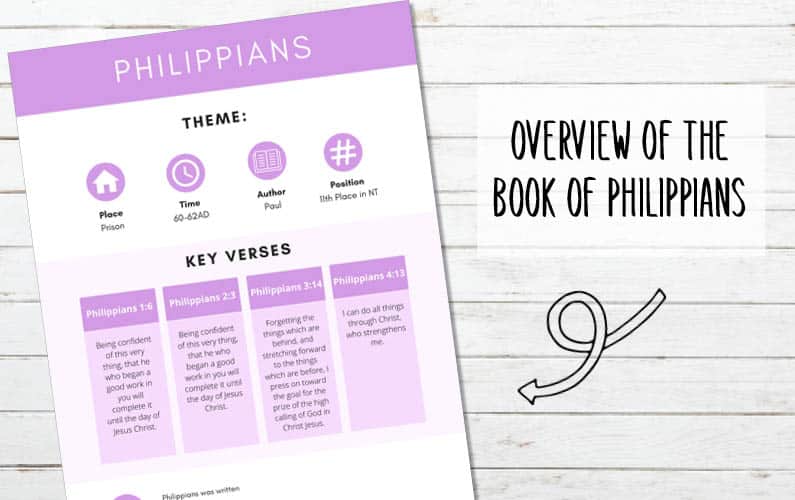
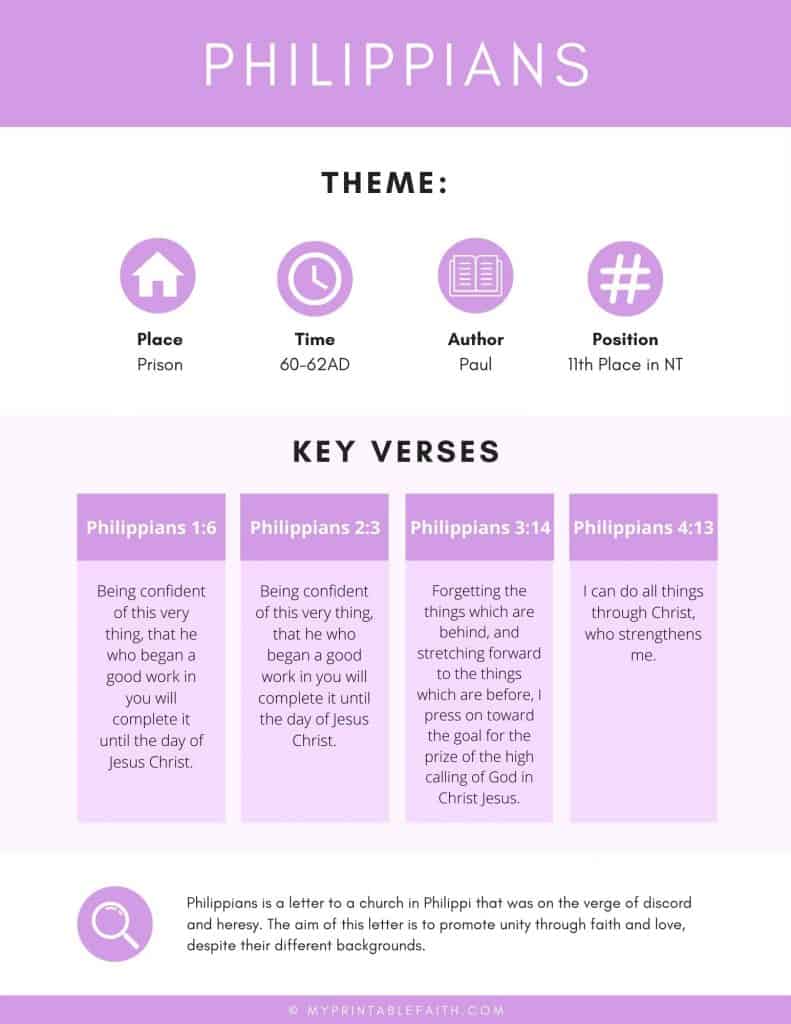
Philippians is the 11th book of the New Testament, the 50th book in the whole Bible and was written by Paul.
Philippians is a letter to a church in Philippi that was on the verge of discord and heresy.
The aim of this letter is to promote unity through faith and love, despite their different backgrounds.
Who wrote the book of Philippians?
The first verse of Philippians states clearly that Paul is the author of the book, and like the book of Colossians he names Timothy in the opening verse, indicating that Timothy played some part in the writing of the book. It is unsure whether Timothy co-wrote the book with Paul or acted as a scribe for Paul.
The apostle Paul spent time in Philippi during his second missionary journey and visited again on his third missionary journey bringing the message of the Gospel and salvation to many.
When was the book of Philippians written?
Of the four prison epistles it is believed that Paul wrote the letter to the Philippians toward the end of his first imprisonment, around 61-62AD.
The other three prison epistles, Ephesians, Colossians and Philemon were written before Philippians and were delivered by Tychicus and Onesimus, whereas the letter to the Philippians was delivered by Epaphroditus.
What is the book of Philippians about?
Often Paul wrote to believers in response to a crisis or challenge they were facing, but this is not the case with Philippians.
The time that Paul spent with the church at Philippi and the joy and love he feels for them is evident in this letter. Paul opens his letter in verses 3 – 6 with these words:
“I thank my God whenever I remember you, always in every request of mine on behalf of you all, making my requests with joy, for your partnership in furtherance of the Good News from the first day until now; being confident of this very thing, that he who began a good work in you will complete it until the day of Jesus Christ.”
The letter was written in response to a gift that Epaphroditus had brought to Paul in prison from the church in Philippi.
Paul wrote to thank them for their gift and to encourage them to grow in their faith.
Despite difficulties Jesus’ love, goodness and grace can be a source of joy and peace.
Philippians Video Overview
The Bible Project has many videos unpacking different books of the bible. This one on Philippians is a great overview to help you understand the book better.
Bible Study on the book of Philippians
The SOAP Bible Study Method is a great way to unpack the book of Philippians more. The study below uses this method to take you through passages of scripture.
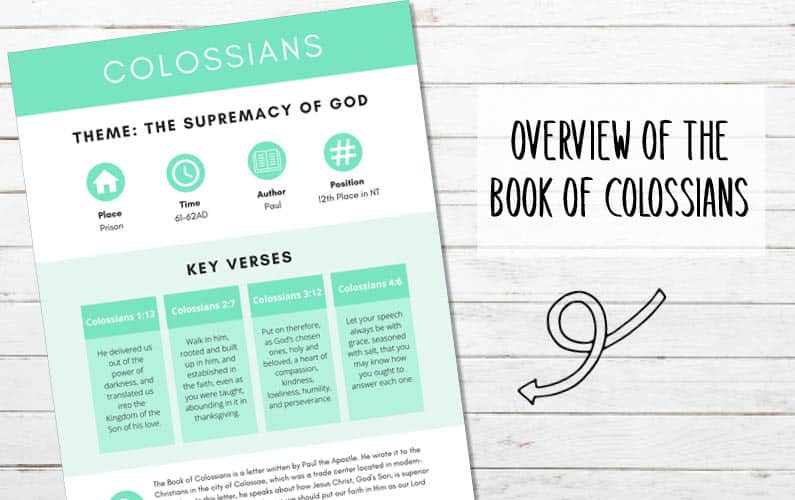
Colossians is the 12th book of the New Testament and the 51st book in the whole Bible. It has 4 chapters and it’s theme is the supremacy of Christ.
The Book of Colossians is a letter written by Paul the Apostle. He wrote it to the Christians in the city of Colossae, which was a trade center located in modern-day Turkey.
In this letter, he speaks about how Jesus Christ, God’s Son, is superior to anything else and that as believers we should put our faith in Him as our Lord and Savior.
There are so many reasons why you should read this book – it’s a very important part of the Bible, it will provide new insights on Christ, and it contains some practical life advice.
Who wrote the book of Colossians?
The author of the book of Colossians is widely attributed to the Apostle Paul, and indeed the first two verses of Colossians read, “Paul, an apostle of Christ Jesus through the will of God, and Timothy our brother, to the saints and faithful brothers in Christ at Colossae: Grace to you and peace from God our Father and the Lord Jesus Christ.”
This would indicate that Paul was the author, and that Timothy also played some part in the writing of the book, in the same way Paul mentions Timothy in the first verses of Philippians. Whether Timothy co-wrote the book with Paul, or acted as a scribe for Paul, is unsure.
There are some though who believe that Paul was not the author as the style of writing and certain phrases used were unlike Paul’s other writings.
When was the book of Colossians written?
The letter to the Colossians was written around 60–62AD while Paul was in prison in Rome and is one of four prison epistles. This was his first imprisonment and took place after his trip to Rome.
During this time Paul also wrote Ephesians and Philemon and all three letters were sent with and delivered by Tychicus who was accompanied by Onesimus.
What is the book of Colossians about?
The main theme of Colossians is the supremacy of Christ, and that Jesus Christ is Lord over everything, setting him above and apart from the other gods of the time.
He is the visible image of the invisible God.
Paul also emphasises the thought of Christ as head of the church and teaches a new and godly model for relationships and families.
The letter was intended to be an encouragement to the church, and as Paul often does, he encourages believers to live pure and godly lives.
It also comes to warn them about false teachers and false doctrines in their midst, instructing them to fight off sinful practices.
Colossians Video Overview
The Bible Project has a great video on Colossians to give you an overview of this book in the Bible.
Bible Study on the book of Colossians
The SOAP Bible Study Method is a great way to understand the scriptures better. The study below utilises this method and makes it easy to go through the book by breaking it down into sections. If you would like to dive deeper into Colossians and discover what it means for you personally then I recommend giving the Bible study a go.
Praying through Scripture is a great way to grow our prayer life.
Scripture is a wonderful resource when it comes to prayer, how to pray, and what to pray for.
God’s Word encourages us to pray according to His Will (1 John 5:14-15) and praying through Scripture is a good way to keep us in line with that.
The Psalms are particularly good for praying through and Psalm 91 is a great place to start.
What is Psalm 91?
Psalm 91 is known as a Psalm of protection for believers and it talks about God’s sovereign protection of His people.
It is not clear who wrote Psalm 91, some believe it was written by David, others believe it was written by Moses, with David incorporating it into his book of Psalms.
What is clear though is that whoever wrote it knew God, and knew that no matter what was going on around them at the time God was there, offering a safe place, and protection from the fears, threats and dangers they were faced with.
Why Pray Psalm 91?
Psalm 91 is a popular Psalm to pray through when seeking protection.
The busyness and worries of life are real and can often impact on our ability to cope with the every day things of life.
Maybe you are feeling overwhelmed, or unsafe, or anxious, or in need of God’s protection, Psalm 91 offers assurance and comfort to those who love God.
Take some time to read it through, meditate on it, and pray through it.
Psalm 91 Words
He who dwells in the secret place of the Most High
will rest in the shadow of the Almighty.
I will say of Yahweh, “He is my refuge and my fortress;
my God, in whom I trust.”
For he will deliver you from the snare of the fowler,
and from the deadly pestilence.
He will cover you with his feathers.
Under his wings you will take refuge.
His faithfulness is your shield and rampart.
You shall not be afraid of the terror by night,
nor of the arrow that flies by day,
nor of the pestilence that walks in darkness,
nor of the destruction that wastes at noonday.
A thousand may fall at your side,
and ten thousand at your right hand;
but it will not come near you.
You will only look with your eyes,
and see the recompense of the wicked.
Because you have made Yahweh your refuge,
and the Most High your dwelling place,
no evil shall happen to you,
neither shall any plague come near your dwelling.
For he will put his angels in charge of you,
to guard you in all your ways.
They will bear you up in their hands,
so that you won’t dash your foot against a stone.
You will tread on the lion and cobra.
You will trample the young lion and the serpent underfoot.
“Because he has set his love on me, therefore I will deliver him.
I will set him on high, because he has known my name.
He will call on me, and I will answer him.
I will be with him in trouble.
I will deliver him, and honor him.
I will satisfy him with long life,
and show him my salvation.”
How to Pray Psalm 91
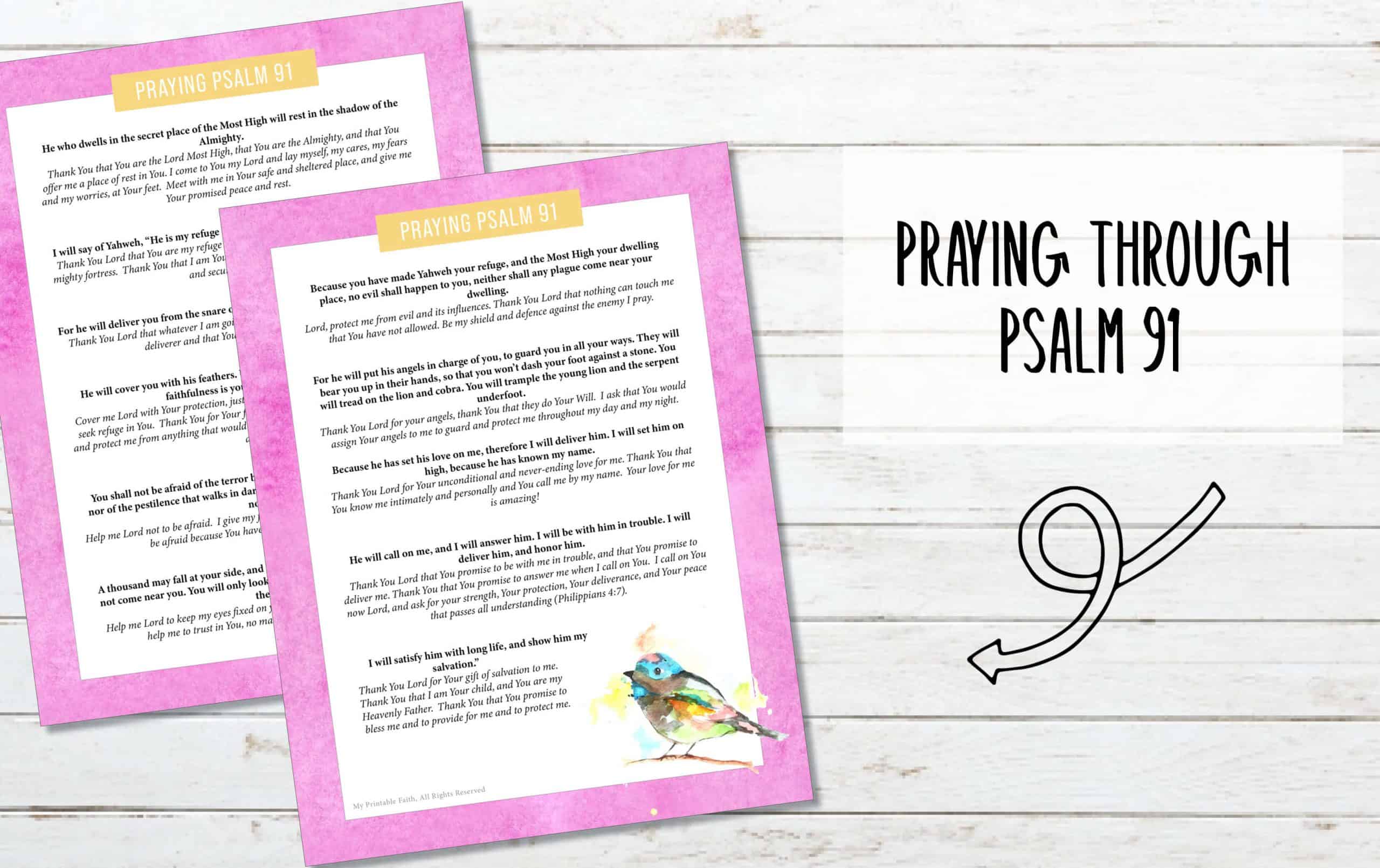
He who dwells in the secret place of the Most High will rest in the shadow of the Almighty.
Thank You that You are the Lord Most High, that You are the Almighty, and that You offer me a place of rest in You. I come to You my Lord and lay myself, my cares, my fears and my worries, at Your feet. Meet with me in Your safe and sheltered place, and give me Your promised peace and rest.
I will say of Yahweh, “He is my refuge and my fortress; my God, in whom I trust.”
Thank You Lord that You are my refuge and that You offer me protection like that of a mighty fortress. Thank You that I am Your child and that I can trust in You and feel safe and secure in that trust.
For he will deliver you from the snare of the fowler, and from the deadly pestilence.
Thank You Lord that whatever I am going through right now I know that You are my deliverer and that You will bring me through this.
He will cover you with his feathers. Under his wings you will take refuge. His faithfulness is your shield and rampart.
Cover me Lord with Your protection, just as a mother bird protects her chicks, so Lord I seek refuge in You. Thank You for Your faithfulness to me. I ask You Lord to shield me and protect me from anything that would come against me and seek to bring me harm or danger.
You shall not be afraid of the terror by night, nor of the arrow that flies by day, nor of the pestilence that walks in darkness, nor of the destruction that wastes at noonday.
Help me Lord not to be afraid. I give my fears to You and I thank You that I don’t need to be afraid because You have promised to be with me always.
A thousand may fall at your side, and ten thousand at your right hand; but it will not come near you. You will only look with your eyes, and see the recompense of the wicked.
Help me Lord to keep my eyes fixed on you and not on the circumstances around me, help me to trust in You, no matter what others are saying or doing.
Because you have made Yahweh your refuge, and the Most High your dwelling place, no evil shall happen to you, neither shall any plague come near your dwelling.
Lord, protect me from evil and its influences. Thank You Lord that nothing can touch me that You have not allowed. Be my shield and defence against the enemy I pray.
For he will put his angels in charge of you, to guard you in all your ways. They will bear you up in their hands, so that you won’t dash your foot against a stone. You will tread on the lion and cobra. You will trample the young lion and the serpent underfoot.
Thank You Lord for your angels, thank You that they do Your Will. I ask that You would assign Your angels to me to guard and protect me throughout my day and my night.
“Because he has set his love on me, therefore I will deliver him. I will set him on high, because he has known my name.
Thank You Lord for Your unconditional and never-ending love for me. Thank You that You know me intimately and personally and You call me by my name. Your love for me is amazing!
He will call on me, and I will answer him. I will be with him in trouble. I will deliver him, and honor him.
Thank You Lord that You promise to be with me in trouble, and that You promise to deliver me. Thank You that You promise to answer me when I call on You. I call on You now Lord, and ask for your strength, Your protection, Your deliverance, and Your peace that passes all understanding (Philippians 4:7).
I will satisfy him with long life, and show him my salvation.”
Thank You Lord for Your gift of salvation to me. Thank You that I am Your child, and You are my Heavenly Father. Thank You that You promise to bless me and to provide for me and to protect me.
Amen
God offers His protection for us and all we have to do is ask for it.
How wonderful is that!
Praying protection for ourselves, and our families is something we should do every day.
Why not start today?
No one can give you protection the way God can give you protection!
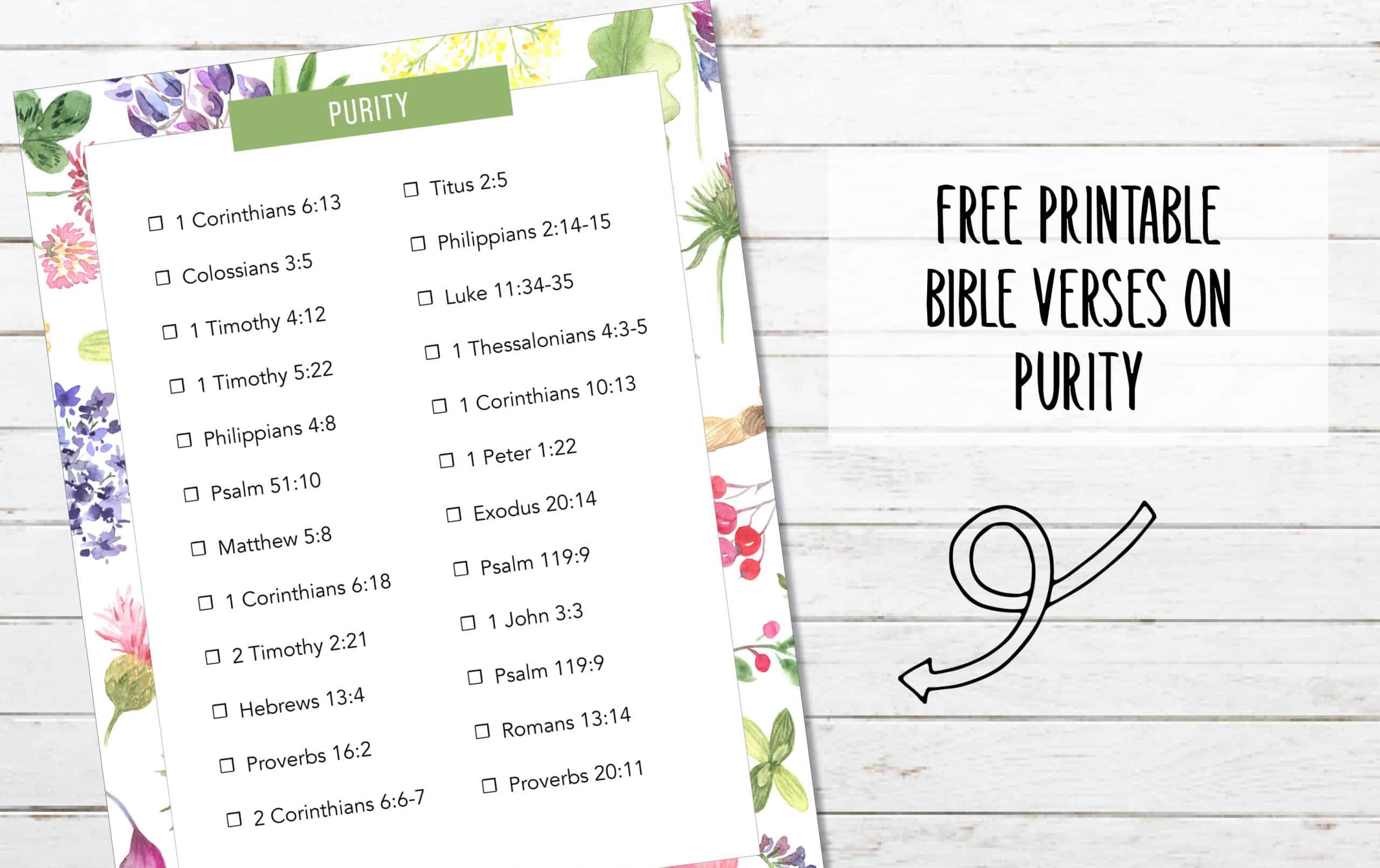
The following Scripture verses, with the free printable download, will shed a light on what God’s purity is, and what He expects of us.
1 Corinthians 6:13
“Foods for the belly, and the belly for foods,” but God will bring to nothing both it and them. But the body is not for sexual immorality, but for the Lord; and the Lord for the body.
Colossians 3:5
Put to death therefore your members which are on the earth: sexual immorality, uncleanness, depraved passion, evil desire, and covetousness, which is idolatry.
1 Timothy 4:12
Let no man despise your youth; but be an example to those who believe, in word, in your way of life, in love, in spirit, in faith, and in purity.
1 Timothy 5:22
Lay hands hastily on no one. Don’t be a participant in other people’s sins. Keep yourself pure.
Philippians 4:8
Finally, brothers, whatever things are true, whatever things are honorable, whatever things are just, whatever things are pure, whatever things are lovely, whatever things are of good report: if there is any virtue and if there is any praise, think about these things.
Psalm 51:10
Create in me a clean heart, O God. Renew a right spirit within me.
Matthew 5:8
Blessed are the pure in heart, for they shall see God.
1 Corinthians 6:18
Flee sexual immorality! “Every sin that a man does is outside the body,” but he who commits sexual immorality sins against his own body.
2 Timothy 2:21
If anyone therefore purges himself from these, he will be a vessel for honor, sanctified, and suitable for the master’s use, prepared for every good work.
Hebrews 13:4
Let marriage be held in honor among all, and let the bed be undefiled; but God will judge the sexually immoral and adulterers.
Proverbs 16:2
All the ways of a man are clean in his own eyes; but the Lord weigheth the spirits
Proverbs 20:11
Even a child is known by his doings, whether his work be pure, and whether it be right.
2 Corinthians 6:6-7
By pureness, by knowledge, by long suffering, by kindness, by the Holy Ghost, by love unfeigned,By the word of truth, by the power of God, by the armour of righteousness on the right hand and on the left.
Psalm 119:9
Wherewithal shall a young man cleanse his way? by taking heed thereto according to thy word.
1 John 3:3
And every man that hath this hope in him purifieth himself, even as he is pure.
Psalm 119:9
Wherewithal shall a young man cleanse his way? by taking heed thereto according to thy word.
Romans 13:14
But put on the Lord Jesus Christ, and make no provision for the flesh, for its lusts.
Titus 2:5
To be sober minded, chaste, workers at home, kind, being in subjection to their own husbands, that God’s word may not be blasphemed.
Philippians 2:14-15
Do all things without complaining and arguing, that you may become blameless and harmless, children of God without defect in the middle of a crooked and perverse generation, among whom you are seen as lights in the world.
Luke 11:34-35
The lamp of the body is the eye. Therefore when your eye is good, your whole body is also full of light; but when it is evil, your body also is full of darkness.Therefore see whether the light that is in you isn’t darkness.
1 Thessalonians 4:3-5
For this is the will of God: your sanctification, that you abstain from sexual immorality, that each one of you know how to control his own body in sanctification and honor, not in the passion of lust, even as the Gentiles who don’t know God.
1 Corinthians 10:13
No temptation has taken you except what is common to man. God is faithful, who will not allow you to be tempted above what you are able, but will with the temptation also make the way of escape, that you may be able to endure it.
1 Peter 1:22
Seeing you have purified your souls in your obedience to the truth through the Spirit in sincere brotherly affection, love one another from the heart fervently.
We live in a world that is divided over so many things.
But God calls us to live in unity and harmony with each other.
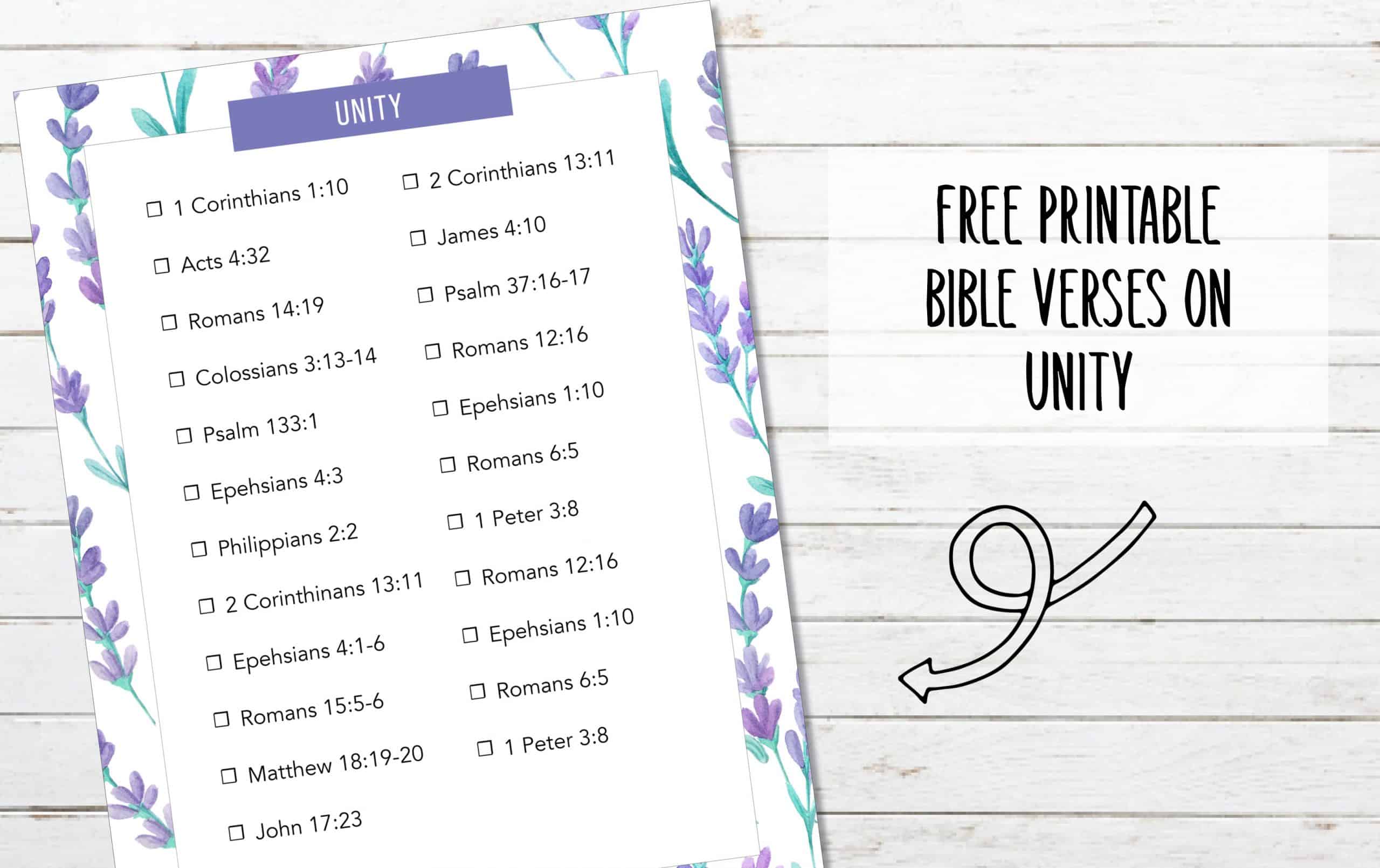
The following collection of Scriptures make a great reflection on what God has to say about unity.
The free downloadable printable is a great resource for your meditation and study.
1 Corinthians 1:10
Now I beseech you, brethren, by the name of our Lord Jesus Christ, that ye all speak the same thing, and that there be no divisions among you; but that ye be perfectly joined together in the same mind and in the same judgment.
Acts 4:32
And the multitude of them that believed were of one heart and of one soul: neither said any of them that ought of the things which he possessed was his own; but they had all things common.
Romans 14:19
Let us therefore follow after the things which make for peace, and things wherewith one may edify another.
Colossians 3:13-14
Forbearing one another, and forgiving one another, if any man have a quarrel against any: even as Christ forgave you, so also do ye. And above all these things put on charity, which is the bond of perfectness.
Psalm 133:1
Behold, how good and how pleasant it is for brethren to dwell together in unity!
Ephesians 4:3
Endeavouring to keep the unity of the Spirit in the bond of peace.
Philippians 2:2
Fulfil ye my joy, that ye be likeminded, having the same love, being of one accord, of one mind.
2 Corinthians 13:11
Finally, brethren, farewell. Be perfect, be of good comfort, be of one mind, live in peace; and the God of love and peace shall be with you.
Ephesians 4:23
And be renewed in the spirit of your mind.
Galatians 3:28
There is neither Jew nor Greek, there is neither bond nor free, there is neither male nor female: for ye are all one in Christ Jesus.
Ephesians 4:1-6
I therefore, the prisoner of the Lord, beseech you that ye walk worthy of the vocation wherewith ye are called, with all lowliness and meekness, with longsuffering, forbearing one another in love; endeavouring to keep the unity of the Spirit in the bond of peace. There is one body, and one Spirit, even as ye are called in one hope of your calling; One Lord, one faith, one baptism, One God and Father of all, who is above all, and through all, and in you all.
Romans 15:5-6
Now the God of patience and consolation grant you to be likeminded one toward another according to Christ Jesus:That ye may with one mind and one mouth glorify God, even the Father of our Lord Jesus Christ.
Matthew 18:19-20
Again I say unto you, That if two of you shall agree on earth as touching any thing that they shall ask, it shall be done for them of my Father which is in heaven. For where two or three are gathered together in my name, there am I in the midst of them.
John 17:23
I in them, and thou in me, that they may be made perfect in one; and that the world may know that thou hast sent me, and hast loved them, as thou hast loved me.
Romans 12:16
Be of the same mind one toward another. Mind not high things, but condescend to men of low estate. Be not wise in your own conceits.
Ephesians 1:10
That in the dispensation of the fulness of times he might gather together in one all things in Christ, both which are in heaven, and which are on earth; even in him.
Romans 6:5
For if we have been planted together in the likeness of his death, we shall be also in the likeness of his resurrection:
1 Peter 3:8
Finally, be ye all of one mind, having compassion one of another, love as brethren, be pitiful, be courteous.
2 Corinthians 13:11
Finally, brethren, farewell. Be perfect, be of good comfort, be of one mind, live in peace; and the God of love and peace shall be with you.
James 4:10
Humble yourselves in the sight of the Lord, and he shall lift you up.
Psalm 37:16-17
A little that a righteous man hath is better than the riches of many wicked. For the arms of the wicked shall be broken: but the Lord upholdeth the righteous.
In this world of influencers Godly Leadership is needed now more than ever.
It is not just about how many followers you have.
Jesus gave us an example of leadership that was all about humility and servanthood.
It goes against what we would think of when we think about leadership.
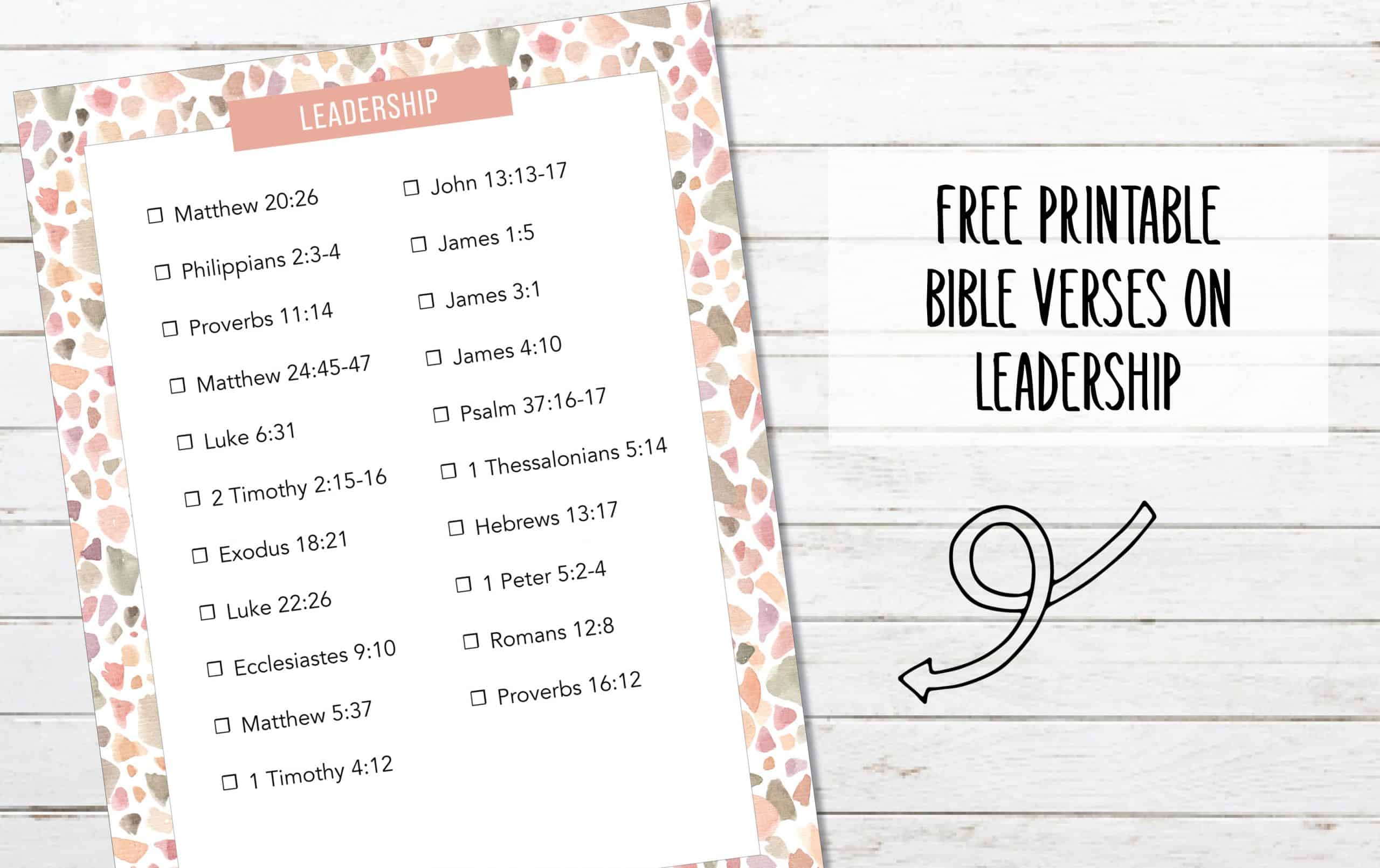
The following verses are a great reflection on what the Bible says about leadership.
And don’t forget to download your free printable!
Matthew 20:26
But it shall not be so among you: but whosoever will be great among you, let him be your minister.
Philippians 2:3-4
Let nothing be done through strife or vainglory; but in lowliness of mind let each esteem other better than themselves. Look not every man on his own things, but every man also on the things of others.
Proverbs 11:14
Where no counsel is, the people fall: but in the multitude of counsellors there is safety.
Matthew 24:45-47
Who then is a faithful and wise servant, whom his lord hath made ruler over his household, to give them meat in due season? Blessed is that servant, whom his lord when he cometh shall find so doing. Verily I say unto you, That he shall make him ruler over all his goods.
Luke 6:31
And as ye would that men should do to you, do ye also to them likewise.
2 Timothy 2:15-16
Study to shew thyself approved unto God, a workman that needeth not to be ashamed, rightly dividing the word of truth. But shun profane and vain babblings: for they will increase unto more ungodliness.
Exodus 18:21
Moreover thou shalt provide out of all the people able men, such as fear God, men of truth, hating covetousness; and place such over them, to be rulers of thousands, and rulers of hundreds, rulers of fifties, and rulers of tens.
Luke 22:26
But ye shall not be so: but he that is greatest among you, let him be as the younger; and he that is chief, as he that doth serve.
Ecclesiastes 9:10
Whatever your hand finds to do, do it with your might; for there is no work, nor plan, nor knowledge, nor wisdom, in Sheol, where you are going.
Matthew 5:37
But let your ‘Yes’ be ‘Yes’ and your ‘No’ be ‘No.’ Whatever is more than these is of the evil one.
1 Timothy 4:12
Let no man despise your youth; but be an example to those who believe, in word, in your way of life, in love, in spirit, in faith, and in purity.
1 Thessalonians 5:14
We exhort you, brothers: Admonish the disorderly; encourage the faint-hearted; support the weak; be patient toward all.
Hebrews 13:17
Obey your leaders and submit to them, for they watch on behalf of your souls, as those who will give account, that they may do this with joy, and not with groaning, for that would be unprofitable for you.
1 Peter 5:2-4
Shepherd the flock of God which is among you, exercising the oversight, not under compulsion, but voluntarily, not for dishonest gain, but willingly; not as lording it over those entrusted to you, but making yourselves examples to the flock. When the chief Shepherd is revealed, you will receive the crown of glory that doesn’t fade away.
Romans 12:8
Or he who exhorts, to his exhorting; he who gives, let him do it with generosity; he who rules, with diligence; he who shows mercy, with cheerfulness.
Proverbs 16:12
It is an abomination for kings to do wrong, for the throne is established by righteousness.
John 13:13-17
You call me, ‘Teacher’ and ‘Lord.’ You say so correctly, for so I am.If I then, the Lord and the Teacher, have washed your feet, you also ought to wash one another’s feet.For I have given you an example, that you should also do as I have done to you.Most certainly I tell you, a servant is not greater than his lord, neither is one who is sent greater than he who sent him.If you know these things, blessed are you if you do them.
James 1:5
But if any of you lacks wisdom, let him ask of God, who gives to all liberally and without reproach, and it will be given to him.
James 3:1
Let not many of you be teachers, my brothers, knowing that we will receive heavier judgment.
James 4:10
Humble yourselves in the sight of the Lord, and he will exalt you.
Psalm 37:16-17
A little that a righteous man hath is better than the riches of many wicked. For the arms of the wicked shall be broken: but the Lord upholdeth the righteous.
Hi, I'm Steph! I want to equip you with faith resources to encourage a love of Gods word in your life.
DISCLAIMER
Some of the links on this website are affiliate links of which My Printable Faith receives a small commission from sales of certain items, but the price is the same for you. As an Amazon Associate I earn from qualifying purchases.
TERMS OF USE
All our printables are for personal or free ministry use only.
If you wish to share our printables on your website, you may do so with a do-follow backlink to the blog page and credit. You may not share the files or images directly on your site.